
Failure doesn't automatically become learning.
Something going wrong gives you information. What you do with that information determines whether anything gets better.
Fail → Fix gives you a practical way to step back from the outcome, look for what it can teach you, and turn that learning into something you can actually use next time.
Failure is an outcome. Learning is a choice.
Four ways to make failure useful.
REFLECT
Debrief outcomes and mine feedback for useful information.
ANTICIPATE
Identify vulnerabilities before they become failures.
FIX
Strengthen the systems and processes around the work.
ACT
Turn what you learned into a concrete next step.

Debrief
Turn an outcome into lessons you can carry forward.
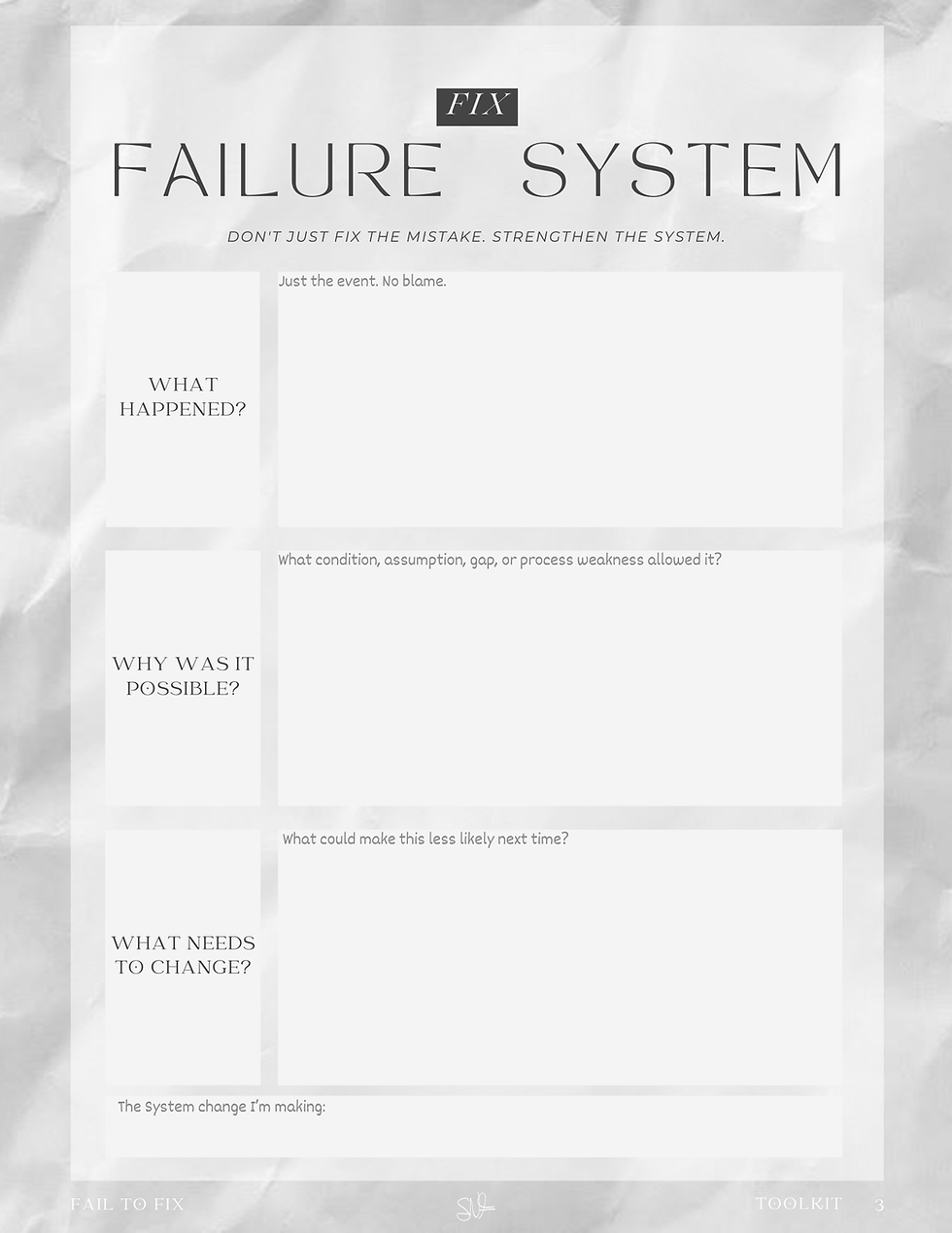
Failure → System
Look beneath the mistake to identify what made it possible.

Pre-Mortem + Red Team
Surface risks and blind spots before they become problems.

Comment Parser
Separate your reaction to feedback from what the feedback might actually tell you.

QA Checklist
Create safeguards around high-stakes work instead of relying on everyone to remember everything.

Learning → Action
Choose what matters enough to change next.
What's Inside
Use it when something goes wrong. Or before it does.
Use the Fail → Fix Toolkit:
- After a mistake, rejection, setback, or near miss
- When feedback is difficult to hear or hard to interpret
- Before a high-stakes project or decision
- When the same problem keeps happening
- During a team debrief
- When “we'll be more careful next time” clearly isn't enough
Use it individually or work through it with your team.